Nexperia Connectivity Solutions by Industry

Purpose-engineered connector packages organized by deployment scenario. Each solution combines the right connector types, cable assemblies, and accessories for your specific application environment.

Fiber Access

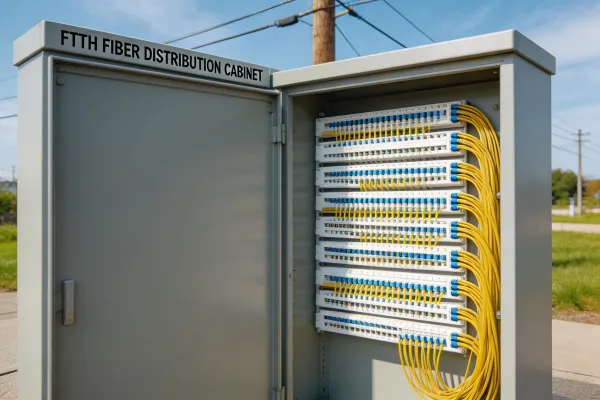
FTTH & Access Network Solutions

Comprehensive connector systems for fiber-to-the-home and fiber-to-the-building deployments. Our field-installable connectors reduce splicing time by 60% compared to traditional fusion methods, enabling rapid last-mile rollouts.

  • Pre-connectorized drop cables (SC/APC, LC/APC)
  • Field-installable mechanical splice connectors
  • Distribution frame adapters and splice trays
  • Weatherproof outdoor closure connectors (IP68)

Typical deployment: 2,000-50,000 subscriber connections per project

Get FTTH Solution Quote
FTTH Connector Solutions
High Density

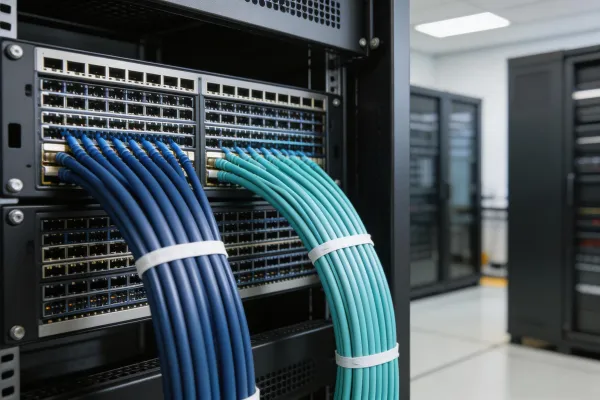
Data Center Interconnect Solutions

High-density MPO/MTP trunk systems and LC duplex patch panels engineered for 100G, 400G, and 800G migration paths. Our structured cabling packages deliver guaranteed Tier 1 channel performance with documented test results for every link.

  • MPO-12 and MPO-24 trunk cables (OM4 / OS2)
  • High-density LC duplex panels (up to 144 ports per 1U)
  • Pre-terminated cassettes for rapid deployment
  • Color-coded polarity management system

Supports IEEE 802.3bs 400GBASE-SR16 and emerging 800G standards

Get Data Center Quote
Data Center Interconnect Solutions
5G Ready

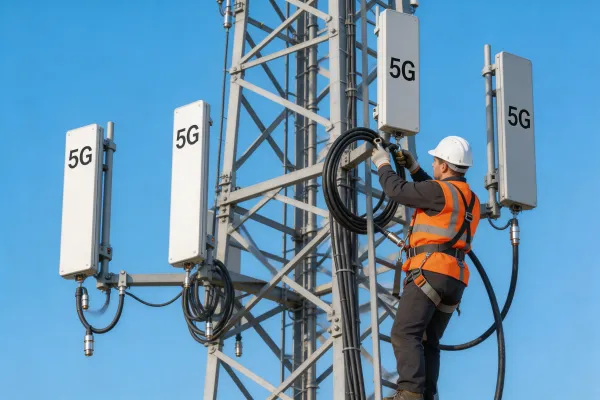
5G & Wireless Infrastructure Solutions

Ruggedized RF connector systems for macro cell, small cell, and distributed antenna system installations. Our connectors maintain VSWR ≤ 1.15:1 across the full 600 MHz to 6 GHz 5G frequency range, with PIM performance ≤ -160 dBc.

  • 4.3-10 push-pull connectors for rapid tower installation
  • N-Type and 7/16 DIN jumper cables (plenum and outdoor rated)
  • IP67 weatherproof connector boots and sealing kits
  • Low-PIM certified assemblies (factory tested, certificate included)

MIL-STD-810G tested: vibration, salt spray, UV exposure, temperature cycling

Get 5G Solutions Quote
5G Wireless Infrastructure Solutions
Industrial Grade

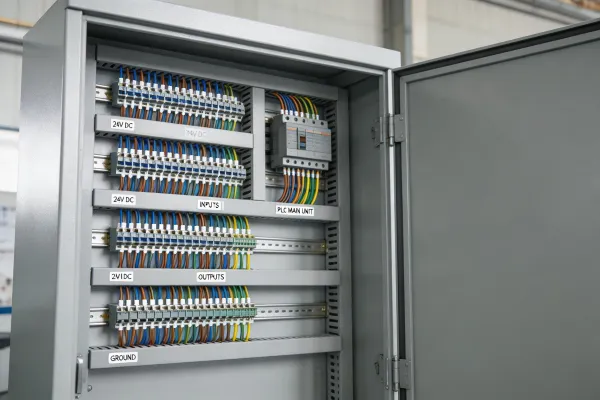
Industrial Automation Solutions

Connector and terminal block systems certified to IATF 16949 for automotive, process control, and factory automation environments. Full material traceability from raw brass rod to finished connector ensures zero-defect performance in safety-critical applications.

  • DIN rail terminal blocks (spring-cage and push-in, up to 600V/30A)
  • M8/M12 sensor connectors (IP67, coded variants)
  • Fieldbus cable assemblies (PROFINET, EtherCAT, EtherNet/IP)
  • Fuse terminal blocks and disconnect terminals

IATF 16949 + ISO 9001 dual-certified production with 99.7% outgoing quality rate

Get Industrial Quote
Industrial Automation Solutions

Connector Selection: Key Trade-offs

Choosing the right interconnect strategy involves balancing performance, cost, and infrastructure constraints. Below are two common decision points our application engineers help customers navigate.

Fiber Optic vs. Enhanced Copper for Last-Mile Access

Carriers deploying last-mile connectivity face a fundamental choice: full fiber (FTTH/FTTB) or enhanced copper technologies (G.fast, VDSL2 vectoring) leveraging existing plant.

Full Fiber Deployment

Offers future-proof bandwidth capacity exceeding 10 Gbps symmetric, lower long-term maintenance costs, and superior latency (typically < 1 ms) for latency-sensitive applications like remote surgery and autonomous vehicle control. However, greenfield fiber deployments require significant civil works investment — typically $800-$1,500 per premises passed in urban areas, according to FTTH Council Europe 2023 estimates.

Enhanced Copper / Hybrid Approach

G.fast technology delivers up to 1 Gbps over existing copper loops shorter than 250 meters, at roughly 30-40% of the per-premises cost of new fiber. This approach enables faster time-to-revenue for operators with existing copper plant, though bandwidth degrades sharply beyond 100 meters and ongoing maintenance costs are higher than fiber over a 10-year lifecycle.

Nexperia supplies connectors for both architectures. Our SC/APC and LC/APC connectors serve GPON/XGS-PON fiber deployments, while our RJ45 and terminal block products support copper-based distribution nodes.

Active Optical Networks (AON) vs. Passive Optical Networks (PON)

For fiber access deployments, network architects must choose between active and passive splitting architectures — a decision that affects connector density, field equipment, and operational costs.

Active Optical Networks

AON provides dedicated bandwidth per subscriber with reach up to 80 km using powered Ethernet switches at each split point. This simplifies troubleshooting (each link is independently monitored) but increases field power requirements and OPEX — each active node consumes 50-200W and requires battery backup.

Passive Optical Networks

PON architectures use unpowered 1:32 or 1:64 optical splitters, eliminating field power requirements entirely. GPON supports 2.5 Gbps downstream shared among subscribers. The trade-off is shared bandwidth, more complex fault isolation (OTDR testing required), and typical reach limited to 20 km from the OLT.

Our PLC splitter connectors and ODF adapters support PON deployments, while our high-count MPO trunk assemblies serve AON point-to-point architectures.

Application Boundaries & Performance Caveats

Transparent performance data helps you select the right connector for your specific operating conditions. Below are key limitations to consider during design-in.

Bend Radius Constraints

Single-mode fiber patch cords require a minimum bend radius of 30 mm (15 mm for bend-insensitive G.657.A2 fiber). Exceeding this limit increases insertion loss by 0.1-0.5 dB per bend and may cause permanent fiber damage in tight cabinet installations.

Temperature Derating

Standard connector insertion loss specifications are rated at 23°C ± 5°C. At temperature extremes (-40°C or +85°C), insertion loss may increase by up to 0.1 dB due to ferrule expansion/contraction. Applications in uncontrolled outdoor environments should specify our extended-temperature connector series.

Mating Cycle Limits

Our standard fiber connectors are rated for 500 mating cycles per IEC 61300-2-2. Frequent reconnection scenarios (test benches, patch panels with daily reconfiguration) should use our enhanced-durability series rated for 2,000+ cycles, or consider MPO connectors with guided alignment pins.

RF Connector Frequency Ceiling

Our standard N-Type connectors are rated to 11 GHz. SMA connectors operate to 18 GHz. Applications above these frequencies (mmWave 5G at 24-39 GHz) require 2.92mm or 1.85mm precision connectors — contact our RF engineering team for high-frequency design support.

Let Us Design Your Connector Solution

Tell us about your application environment and volume requirements. Our application engineers will propose a connector package within 48 hours, including pricing and lead time estimates.

Start Your Project